Terrarium Maintenance Tips for Malaysia’s Tropical Climate
Why Terrarium Care Is Different in Malaysia
Terrariums behave differently in tropical climates compared to temperate countries.
In Malaysia — especially in Kuala Lumpur and Petaling Jaya — factors such as:
-
High natural humidity
-
Strong sunlight
-
Daily air-conditioning
-
Indoor temperature fluctuations
directly affect plant health.
Understanding how to adjust your terrarium care to our local conditions is the key to long-term success.
1. Understanding Open vs Closed Terrarium Care
Maintenance begins with knowing your terrarium type.
Closed Terrariums (High Humidity Ecosystem)
Closed terrariums recycle moisture naturally.
In Malaysia’s already humid climate, they require very light watering.
Watering Guide:
-
Water lightly once every 2–4 weeks.
-
Observe condensation patterns.
-
If heavy fogging appears daily, reduce moisture.
Important:
If condensation fully covers the glass for long periods, open the lid for a few hours to release excess humidity.
Open Terrariums (Airflow Required)
Open terrariums are common in KL offices and homes.
Watering Guide:
-
Water approximately 1–2 times per week depending on soil dryness.
-
Always check soil moisture before watering.
-
If top soil feels dry, water lightly.
In air-conditioned offices in Petaling Jaya, soil may dry faster.
Observation is more important than fixed schedules.
2. Lighting Considerations in KL & PJ
Malaysia’s sunlight can be intense.
Glass containers magnify heat, which may cause:
-
Leaf burn
-
Excess condensation
-
Plant stress
Ideal Placement:
-
Bright, indirect light
-
Near windows with filtered curtains
-
1–2 meters away from strong afternoon sun
Avoid placing terrariums on balconies exposed to direct tropical heat.
3. Managing Humidity
Malaysia’s climate is naturally humid. This affects terrarium ecosystems.
Signs of Excess Humidity:
-
Persistent condensation
-
Mold growth
-
Mushy stems
How to Adjust:
-
Open lid temporarily (for closed terrariums)
-
Reduce watering
-
Improve airflow in room
Balance is essential — terrariums should feel slightly humid, not wet.
4. Preventing Mold Growth
Mold can occasionally appear, especially in closed terrariums.
Common causes in Malaysia:
-
Overwatering
-
Poor airflow
-
Decaying plant matter
Prevention Tips:
-
Remove dead leaves promptly
-
Avoid overcrowding
-
Use compatible plant combinations
If mold appears:
-
Open lid for ventilation
-
Remove affected area carefully
Most mild mold issues are reversible if addressed early.
5. Pruning and Plant Control
In Malaysia’s warm climate, some plants grow faster.
Regular pruning:
-
Maintains aesthetic balance
-
Prevents overcrowding
-
Encourages healthy growth
Use small scissors and trim gently.
Avoid aggressive cutting, especially in compact containers.
6. Adjusting for Air-Conditioned Environments
Many homes and offices in Kuala Lumpur operate air-conditioning daily.
Air-conditioning:
-
Reduces humidity
-
Dries soil faster
-
May stress humidity-loving plants
What to Do:
-
Monitor soil moisture more frequently
-
Avoid placing terrariums directly under air vents
-
Rotate placement if necessary
Understanding your indoor environment is crucial.
7. Cleaning the Glass
Over time, glass may develop:
-
Water marks
-
Soil smudges
-
Condensation residue
Clean gently using:
-
A soft cloth
-
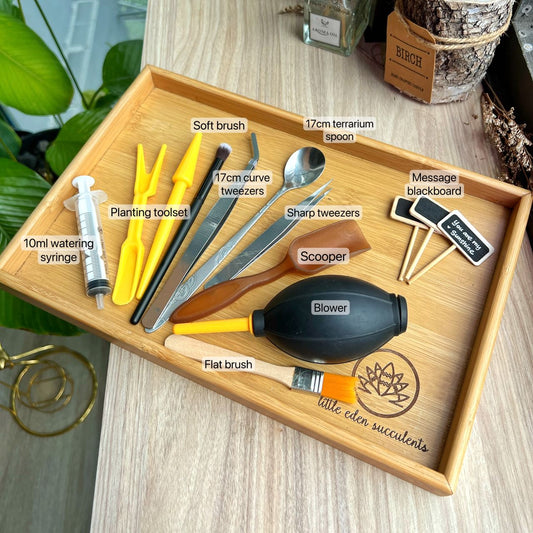
A small brush for narrow openings
Clear glass improves both aesthetics and plant health observation.
8. Seasonal Adjustments in Malaysia
Although Malaysia does not have four seasons, weather patterns vary:
-
Hot, dry spells
-
Monsoon periods
During hotter months:
-
Soil may dry faster
-
Increase monitoring
During rainy seasons:
-
Natural humidity rises
-
Reduce watering frequency
Adjust care gradually based on observation.
9. When to Replant or Refresh
Over time, terrariums may require refreshing.
Signs include:
-
Overgrown plants
-
Soil compaction
-
Declining plant health
Refreshing may involve:
-
Replacing specific plants
-
Adjusting soil levels
-
Redesigning layout
This is a normal part of long-term care.
10. Simple Terrarium Care Checklist (Malaysia Edition)
✔ Place in bright indirect light
✔ Avoid direct tropical sun
✔ Check soil before watering
✔ Adjust watering for air-conditioning
✔ Remove dead leaves promptly
✔ Observe condensation patterns
Consistency is more important than intensity.
Frequently Asked Questions
How often should I water my terrarium in KL?
Closed terrariums: every 2–4 weeks.
Open terrariums: 1–2 times per week depending on soil dryness.
Why is my terrarium fogging up?
Excess humidity. Open the lid temporarily to balance moisture.
Can terrariums survive in Malaysia’s heat?
Yes — if placed away from direct sunlight and watered appropriately.
Final Thoughts
Maintaining a terrarium in Malaysia’s tropical climate requires awareness rather than complexity.
In Kuala Lumpur and Petaling Jaya, indoor conditions vary widely — from humid apartments to dry, air-conditioned offices.
The key to successful terrarium care is observation. Notice small changes, adjust gradually, and maintain balance.
With mindful care, your miniature ecosystem can thrive beautifully — even within our vibrant tropical environment.