Introduction: Don’t Panic — Succulents Are Resilient
One of the most common searches in Malaysia is:
-
“Why is my succulent dying?”
-
“Succulent turning yellow what to do?”
-
“How to revive overwatered succulent?”
If you live in Kuala Lumpur or Petaling Jaya, the problem is rarely lack of care. It is usually too much care, especially too much water.
The good news? Most succulents can be saved if you act early.
Let’s break down the real causes and practical solutions — adapted specifically for Malaysia’s tropical climate.
1. Overwatering (The #1 Killer in Malaysia)
Because Malaysia is humid year-round, soil dries slower than in dry climates.
Signs of Overwatering:
-
Yellow, translucent leaves
-
Soft, mushy stem
-
Leaves falling off easily
-
Blackened roots
-
Foul smell from soil
In KL apartments and PJ landed homes, overwatering often happens when:
-
People water on a weekly schedule without checking soil
-
Soil mix retains too much moisture
How to Save an Overwatered Succulent
-
Remove plant from pot immediately.
-
Gently shake off wet soil.
-
Inspect roots — trim black or mushy roots.
-
Let plant air dry for 1–2 days.
-
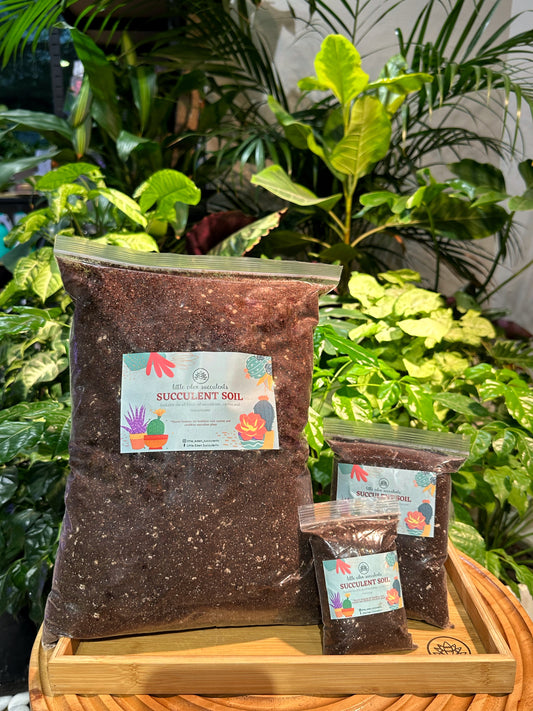
Repot in dry, well-draining succulent soil.
-
Do not water for at least 5–7 days.
If the stem base is still firm, your plant can recover.
2. Underwatering (Less Common, But Possible)
Although Malaysia is humid, air-conditioned offices in Kuala Lumpur can dry soil faster.
Signs of Underwatering:
-
Wrinkled leaves
-
Thin or deflated appearance
-
Dry, crispy lower leaves
How to Fix It:
-
Water thoroughly until water drains out.
-
Allow soil to dry fully before watering again.
Succulents store water in their leaves, so mild underwatering is safer than overwatering.
3. Lack of Light (Very Common Indoors)
Succulents need bright indirect sunlight.
Signs of Insufficient Light:
-
Stretching upward (etiolation)
-
Leaves spaced far apart
-
Pale green color
-
Leaning toward window
In high-rise KL apartments, some rooms may not get enough natural light.
Solution:
-
Move plant closer to window
-
Rotate weekly
-
Avoid dark corners
Bright indirect light for 4–6 hours daily is ideal.
4. Root Rot Due to Humidity
Malaysia’s climate increases fungal risk.
Root rot happens when:
-
Soil stays wet too long
-
Airflow is poor
-
Pots lack drainage
Prevention is easier than cure:
-
Use ideal and porous soil mix
-
Avoid decorative outer pots trapping water
5. Pest Problems in Tropical Climate
Humidity may attract:
-
Mealybugs
-
Fungus gnats
-
Aphids
Signs:
-
White cotton-like clusters
-
Tiny flying insects near soil
-
Sticky residue on leaves
Solution:
-
Isolate affected plant
-
Remove pests manually
-
Improve airflow
- Get mealybugs killer for treatment purpose
Healthy, well-drained plants are less likely to attract pests.
6. Sudden Environmental Shock
Moving succulents suddenly from:
-
Indoor to outdoor
-
Shaded to direct sun
-
Shop environment to home
May cause stress.
Symptoms:
-
Leaf burn
-
Dropping leaves
-
Color fading
Always transition gradually over 5–7 days.
Can a Dying Succulent Be Saved?
Yes — if:
-
The stem core is firm
-
Some healthy leaves remain
You can even propagate healthy leaves to start fresh plants.
Succulents are survivors. They evolved for harsh conditions. In Malaysia, they simply need controlled moisture.
When to Let Go
If:
-
Entire stem is black and mushy
-
No firm tissue remains
It may be beyond saving.
But consider it part of the learning journey.
Final Thoughts
Most succulent deaths in Malaysia are caused by:
-
Overwatering
-
Poor drainage
-
Lack of light
When you adjust these three factors, success rates increase dramatically.
Growing succulents in KL and PJ is not difficult — it just requires climate awareness.
With observation and patience, you can turn a struggling plant into a thriving one.